The material question
Replacing coal-based reduction changes the chemistry, energy demand, impurity tolerance, and infrastructure around steelmaking. The important question is not whether the material looks impressive in a single test, but whether its structure and processing remain controlled when the conditions change.
Where performance is won or lost
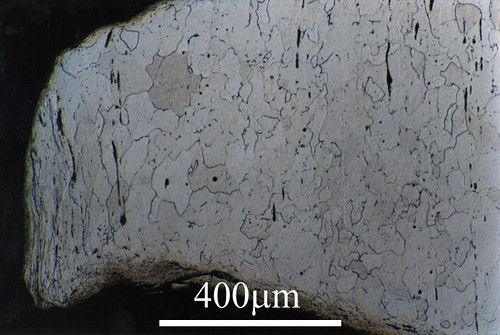
Performance usually emerges from interfaces, defects, geometry, and process history. Two samples with the same nominal composition can behave very differently when their microstructures or boundary conditions differ.
What engineers measure next
A useful evaluation combines a headline property with durability, manufacturability, cost, and failure analysis. That broader scorecard is what turns a promising material into a dependable technology.
This gives me a much clearer way to read the literature.
The trade-off is explained in a very practical way.
I would like to see more data from pilot-scale systems.
This connects a laboratory result to a real engineering decision.
The section on failure modes was especially useful.
The interface between process and performance is the key idea here.
This gives me a much clearer way to read the literature.
The trade-off is explained in a very practical way.
I would like to see more data from pilot-scale systems.